
About Me and My Family
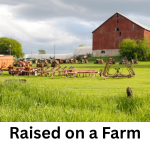
I was raised on a farm by my paternal grandparents. Although I lived with my grandparents from 18 months old, they adopted me and my oldest sister when I was 5 years old. My oldest sister was two years older than me. She lived with them from the time she was born. My parents had a son who was given to someone else to raise and I didn’t find him until I was 47 years old. Our mother remarried and had two other children, a girl and a boy.
Being raised on a farm, there were always things that needed to be done. However, I always managed to squeeze in time to climb an apple tree and read a book, or sew up some clothes that I wanted. When I was 13, my grandfather thought I was becoming too much of a tomboy. My grandmother had gone to work after my sister and I were older. She worked in a school cafeteria. My grandfather had my grandmother bring home some boys to help out on the farm, building fences and doing other chores that he no longer thought fitting for a young lady to be doing. That’s how I met my husband (but that’s a story for another day). I guess being raised on a farm turned me into a Tom Boy.
Daily Chores
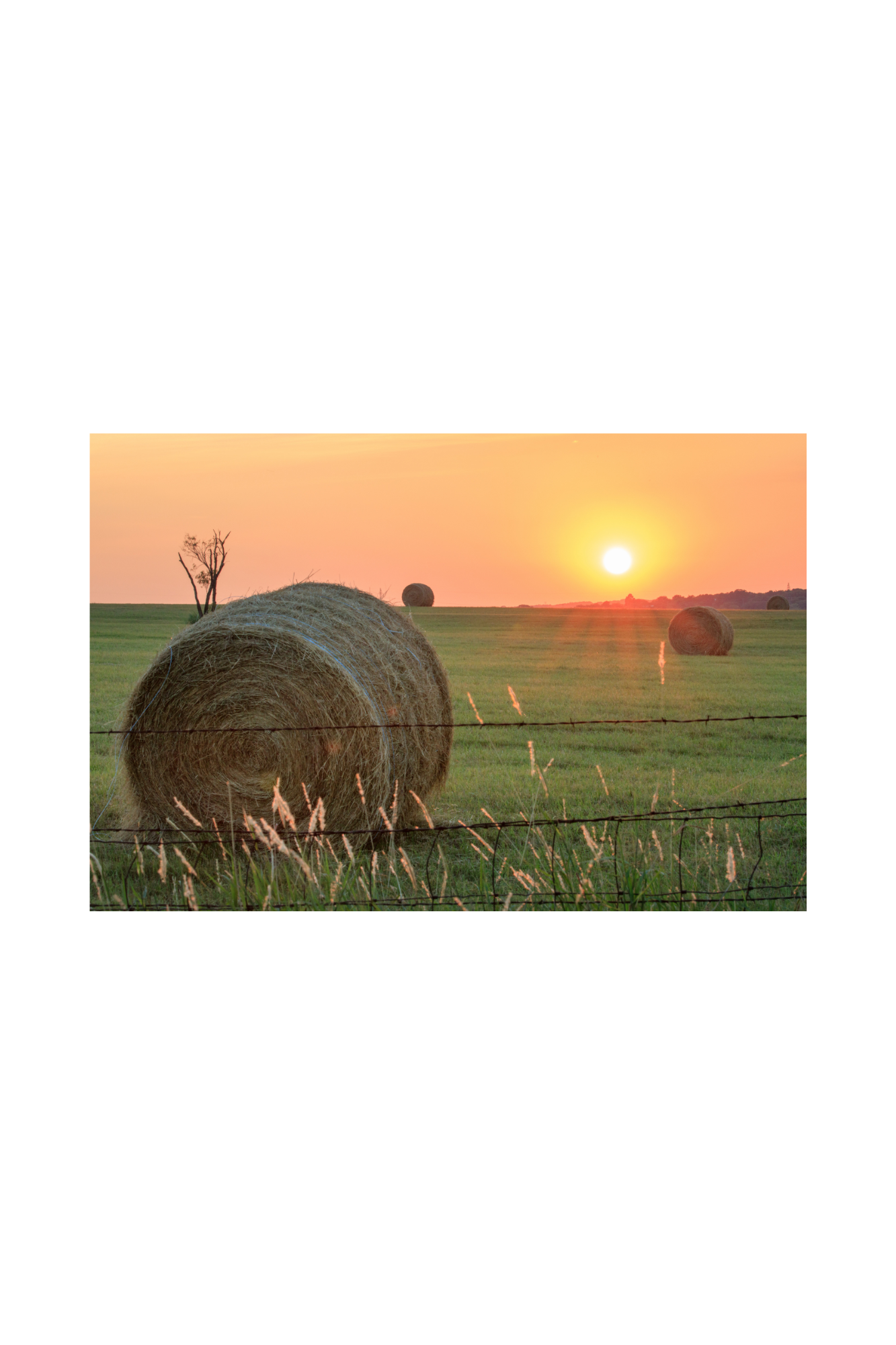
Being brought up and raised on a farm from my youth taught me many things. Of course, there were always so many chores to do. Some before school, some after, and all the time during the summer. We raised a garden, cows, pigs, chickens, and ocassionally rabbits.
We had two hay fields that we mowed and baled hay from twice a year. Also, we had dogs. One was always a work dog that helped round up the cows for feeding. While we were not suppose to spoil the work dog, I did anyway. However, they always did their job when asked. They loved their work.
Living and being raised on a farm, the days were always full, deeply immersed in every aspect of farm life. I’d gather eggs from our chickens, bottle-feed calves, and milked cows when needed. Planting, watering, and reaping crops filled the seasons. Tasks like canning or freezing our produce, picking apples and drying them between old screen doors, and harvesting cherries, pears, peaches, and grapes were constant – all to be preserved.
Moreover, during my teenage years, maintaining our expansive yard required push-mowing. There were always fences to rebuild and rocks to pick up from the fields and garden areas.
The Value of Hard Work and Responsibility
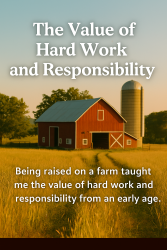
One of the biggest lessons I learned being raised on a farm was the value of hard work and responsibility. From the time I was young, I had daily chores and real responsibilities. These weren’t pretend jobs just to keep me busy, they were things that needed to get done to keep our farm running.
Bottle feeding the young calves that had lost their mother during their birth was my favorite chore. This was my chore first thing in the morning and as soon as I got in from school. It might seem like that wouldn’t be such a hard chore, but it took some skill to keep the calf from yanking the nipple off of that bottle and spilling the formula.
Taking care of the animals wasn’t just about tossing some food in a bowl. I made sure each one had clean water, fresh hay, and the right kind of feed. If something was missed, it could affect their health. That kind of responsibility teaches you to be careful, thoughtful, and dependable.
I also learned that work doesn’t always wait for the “right time.” Whether it was raining, freezing cold, or boiling hot, the chores still had to be done. Animals still needed care, and crops still had to be checked. This taught me that life isn’t about waiting for perfect conditions, it’s about showing up and doing what needs to be done, no matter what.
Even when the work was hard, and sometimes it really was, there was a special kind of satisfaction in knowing I had done my part. I knew I had given back to my grandparents who had given me so much. At the end of a long day, I could look around and see the results of my effort. The garden was weeded, the grass was mown, the cows were fed, the barn was clean. That sense of accomplishment helped shape the person I am today.
Being raised on a farm didn’t just give me chores. It gave me character. It helped me understand that hard work isn’t a punishment, it’s a gift. It builds confidence, strength, and pride. And those lessons have stayed with me all through life.
Lessons in Sustainability from Farm Life
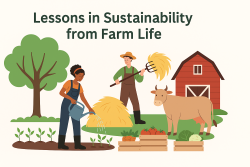
Growing up on a farm meant learning how to live with the land and not just on it. We didn’t waste what we had. Everything had a purpose, and almost nothing went to waste. These everyday habits built a natural understanding of sustainability long before it became a buzzword.
We reused jars for canning and saved feed sacks to use to store things in. Food scraps went to the pigs or compost pile. Clothes were mended, not tossed. Old wood was repurposed for kindling for the Warm Morning Stove that provided heat to the house. Even leftovers were turned into tomorrow’s meal.
Seasonal eating was just our way of life. We ate what was ripe and preserved what was extra. Canning, drying, and freezing let us enjoy the fruits of our labor all year long. Nothing felt more rewarding than opening a jar of home-canned tomatoes or green beans in the middle of winter.
Living this way taught me to be mindful of resources. You learn that nature gives back when you treat it with respect. It’s a valuable lesson I’ve carried with me ever since and one that more people are rediscovering as they seek simpler, more sustainable ways to live.
Skills That Last a Lifetime
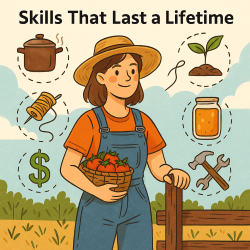
Life on the farm wasn’t just about chores, it was a daily classroom. But, every task taught something useful, and those lessons still serve me well today. Of course at the time, I really didn’t always think of it that way, but all that hard work built up a toolbox of real-life skills that last a lifetime.
I learned how to cook full meals from scratch, sew clothes by hand and on an old pedal powered Singer, plant and harvest a garden, and preserve food through canning and freezing. I knew how to care for animals, fix broken fences, manage a budget, and solve problems with whatever was on hand.
These weren’t just survival skills, they were confidence builders. They taught me how to be resourceful, how to stay calm under pressure, and how to keep going when things got hard. I learned that if something was broken, it could be fixed. If something didn’t work out, you tried again. And most importantly, I learned that I was capable.
Even today, whether I’m fixing something around the house or teaching someone else how to do something, I’m reminded how grateful I am for all those early lessons. They gave me strength, independence, and a sense of pride that can’t be bought in a store.
Life Lessons
Despite many of my friends thinking my childhood was tough due to constant farm work, I viewed myself as fortunate and thankful be be raised on a farm. Witnessing life and death among farm animals and pets taught me hard lessons, giving me an appreciation for life and acceptance of death as a natural part of it.
Also, being raised on a farm taught me that not everything you plant yields as expected due to weather challenges. This instilled in me an appreciation for the fruits of our labor. Whether it was picking, Stringing, breaking, and canning beans or harvesting cucumbers and spices for pickles, these preserved foods brought joy during winter when fresh produce was scarce.
Fortunately, our garden always yielded plenty, allowing us to share with others less fortunate. Providing canned green beans, preserves, dried apples, or tomato juice, butter, milk, or whatever we had at the time was deeply satisfying. My desire to help others found fulfillment through our hard work, a lesson I will always cherish.
Fresh Meat
One of the things I loved about being raised on a farm was always having cows, pigs, and chickens and that meant there was always meat in our freezer. Something I didn’t understand as a kid was that most homes didn’t have a lot of meat because the cost was too high.
Whenever we would butcher a cow my job (afterage 12) was to remove the hide with a knife. This was a big responsibility. You could not make holes in the hide in order for it to be sold. My least favorite things to do was scraping the hair off of hogs and plucking chickens. While It seemed like you would never get finished, you always did.
It is a shame that the meats we get in the supermarkets today are almost all imported and filled with chemicals that can be harmful to our bodies. See another one of my articles on this subject HERE.
Author Kaye Terry 8/19/2024